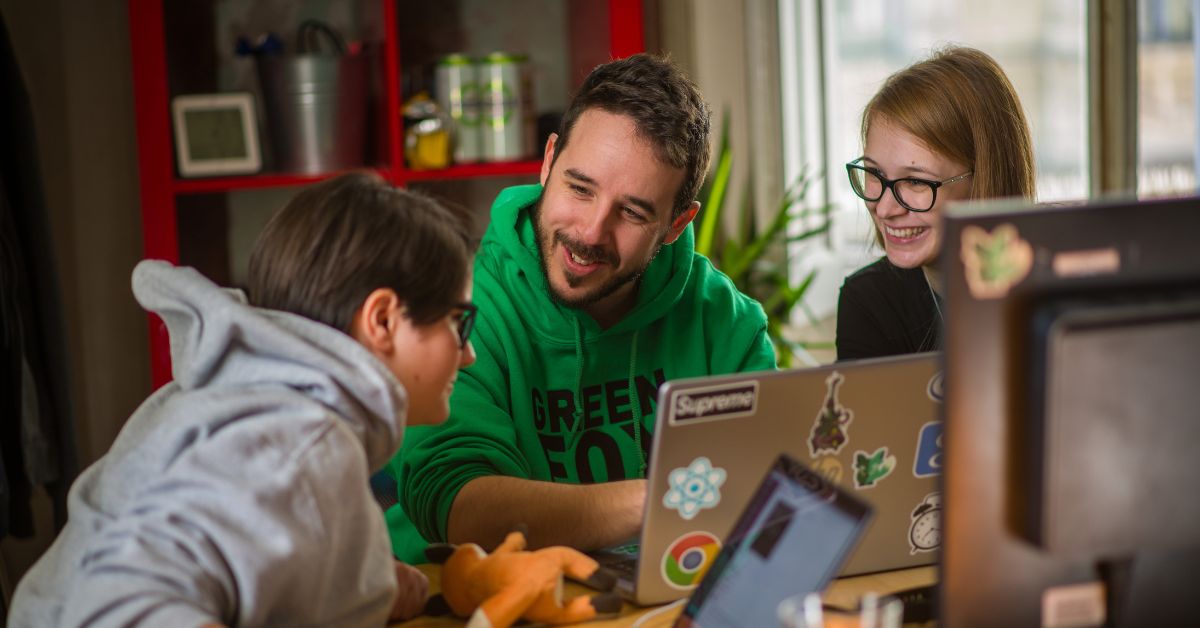
Nokia: "A place defined by an open corporate culture"
Would you like to know our partners better, where you can even start your new IT career after the course? We have great news then! We sat down with Nokia, and asked them what kind of workplace Nokia is and why it is good to work there. Read our article and get to know Nokia!
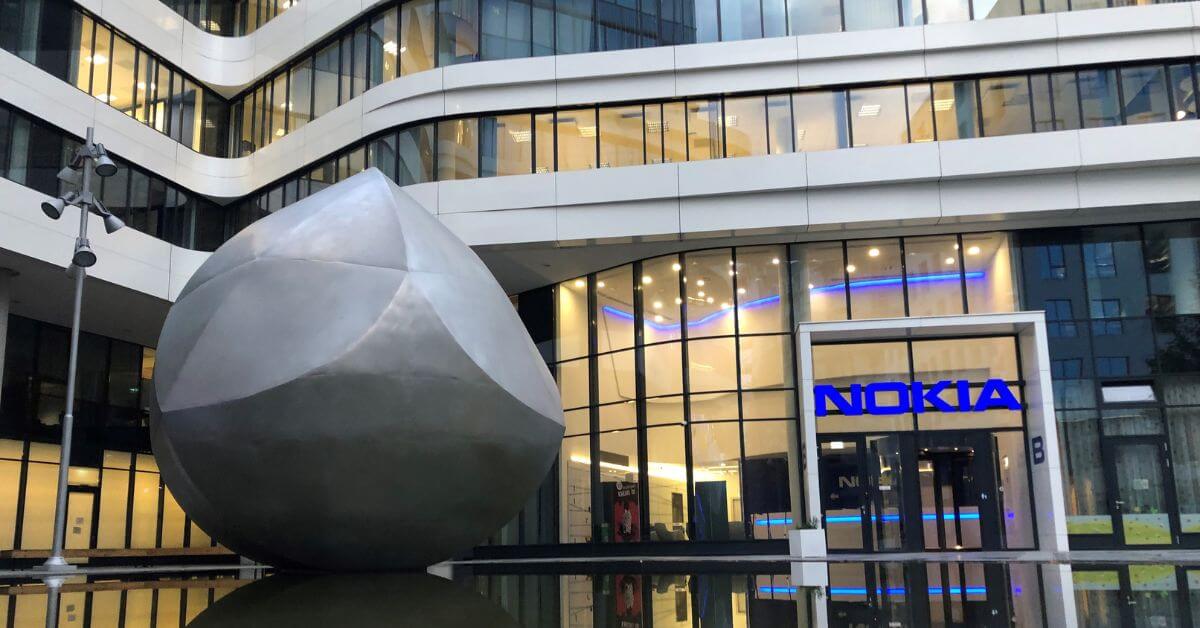
Please, introduce the company. What is Nokia like as a workplace?
Nokia is a place defined by an open corporate culture. telco is a very specialized sector and we build systems that are uniquely complex. Thanks to this complexity, this sector provides a never-ending challenge at the engineering level for those who are committed to continuous development.
Our office is located on Corvin Promenade, and there are currently about 2,400 of us on site, roughly half of whom are R&D. We absolutely support working from home, and depending on the team, you can choose a completely office, hybrid or full remote working option.
Why is it good to work at Nokia?
First of all, we would highlight the atmosphere, the team spirit that permeates everything. It sounds clichéd, but trust is really present everywhere at Nokia. In addition, ethical mindset and acceptance forms the cornerstone of the company’s culture.
We can proudly say that anyone can be reached at any time on relevant topics, even up to the highest level managers. For us, hierarchy is not a determining factor, we focus more on results.
We would also like to mention the professional challenges and opportunities, because anyone who is committed to technology will not be bored for 40 years at least.
What career paths await Green Fox students?
We offer a wide range of career paths. Junior colleagues mostly start their careers as software engineers and begin to deepen their knowledge, but later on they can specialize based on their interest and talent. At Nokia, development and testing are basically separated: it can be front-end or back-end, but we can say that the telco industry is more "back-end heavy". As seniority increases, colleagues get to know more and more areas of application, either within one product or across several products. We strive to ensure that everyone can use their potential - here (just like in Zootropolis) anyone can be anything. If you go to any Leadership Team or Architect meeting in Budapest today, 90% of them started their careers with us back then as testers or software developers. There is hardly a role in our profession that could not be achieved through internal development.
How do you support the digital development of your employees?
Besides a lot of internal training, we use several world-class platforms to support our colleagues’ professional development. Every new colleague has a personalized induction plan and a buddy who guides their professional development during the first months. In this period, the goal is to integrate them and master the basic terminology, with the help of internal training materials and pairwork. Tools such as LinkedIn Learning and several online platforms with tens of thousands of digital books and training materials are available to everyone from the very first moment.
But to answer your question specifically: we support the development of our employees, in return they support the digital development of the entire world.
What is important to you in a junior programmer?
Definitely the attitude, the personality, and the relationship with technology. Expertise itself is less emphasized in the case of juniors. We are looking for candidates who fit into our corporate culture, who have chemistry with the target team, and have commitment to telecommunications.
How do you see Green Fox students?
Their colorful background constantly surprises us. Technical knowledge can differ based on previous experience or basic interest but as we see the students have strong soft skills and express their needs and thoughts well. Determination is definitely a common characteristic, no wonder, since they want to work in a completely new field. This kind of motivation is definitely impressive for future employers, just like Nokia.
Why did you decide to cooperate with Green Fox?
A multiple resourcing strategy is important in the current labor market situation. Cooperation with Green Fox also serves this purpose, and based on our experience so far, we expect continuous supply. Due to the special field of telco, we focus more on "cultural fit" applicants, and the actual competence development starts in-house.
Why would you recommend Green Fox to others?
First of all, because of the flexible, friendly communication, which anticipates good cooperation, and because of the transparency and continuous interactions that keep it going. We regularly discuss the classes, so there is a constant flow of feedback and actions.
We often hear that the lack of professionals is one of the biggest challenges of the IT sector, and that the labor market is no longer able to cover the hiring capacity of IT companies. What do you think about this trend? How do you see the potential of bootcamps?
Due to the waves of investment, we often need to hire hundreds of colleagues a year, which causes a serious challenge for us, too. The willingness to change careers and the activities of bootcamps can be a solution to this problem in the future, but to be honest, it can already be considered a basic pillar.
Obviously, as a software tester, you can start meaningful work sooner than, for example, as a brain surgeon, and the bootcamps take advantage of this feature very well. Many times we only need a very stable foundation to build on, but after that this construction takes many years due to our complex systems. At Nokia, training a productive colleague takes at least 2 years, and experienced colleagues have 10 years of experience. This shows that the retention of colleagues is equally crucial.
We often hear how low the percentage of women is in the IT sector. What is your experience? What steps do you take to improve this ratio?
This is certainly a daily topic at Nokia, too. In the segment, the proportion of women is roughly 10%, while at Nokia including the central functions it is around 35%, and in the engineering side it usually ranges between 10-20%. On the one hand, we believe in providing equal opportunities for everyone, so we participate in several programs on a national level where we promote IT careers through mentoring young people.
For example, at the end of April we held Girls' Day, where we hosted 38 young ladies in the office for a day to show them what life is like here at Nokia. We could also mention our Power Up Girls program, which specifically aims at the professional advancement of female colleagues and the creation of a work-life balance.